Types of Check Valve: Function & Application (Non Return Valve)
Source:|Author:佚名|Published time: 2017-10-13|1944 Views|🔊 Click to read aloud❚❚▶|Share:
figure 7.
8. Wafer Check Valve: ( Types of Check Valves )
Wafer Check Valve
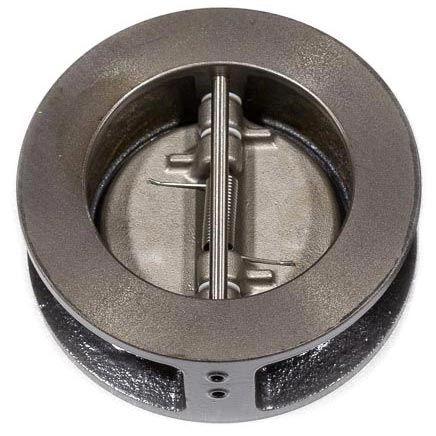
The wafer check valve consists of a wafer style disc that is hinged on one side, assisted with the spring, as seen in figure 8. If there is backflow occurs in the system, the wafer flips and cover the passage.
9. Stop Check Valve: ( Types of Check Valves )
Stop Check Valve
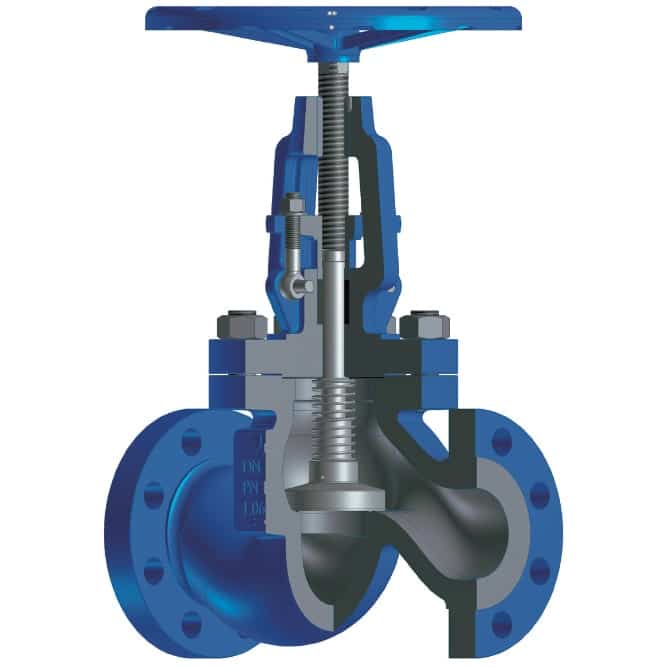
The stop check valve is basically a lift check valve or Y check valve with spring assistance. This valve has manual override feature which allows it to, apart from functioning as normal check valve, override and maintain the valve in open or closed state. Thus, this valve can be used for two features at a time. To perform the override actuation ids generally given by manually through a lever or wheel, as shown in figure 9. This type of valves is generally used in power generation plants, specifically in steam generators, turbines and safety accessories.
10. Foot Check Valve: ( Types of Check Valves )
Foot Check Valve
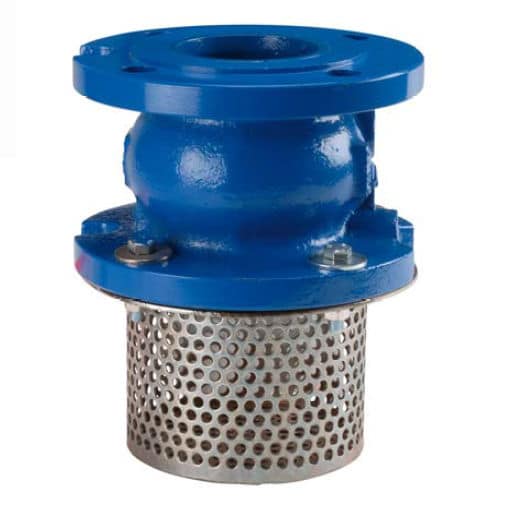
In this type of valve the inlet port is not available, instead, a strainer is available in place of the inlet port, as shown in figure 10. It is basically an in-line ball check valve with spring assistance. This helps the valve to maintain or allow the flow only in one direction whereas block the passage in reverse direction. The strainer available at the inlet prevents the debris and sand particles to enter into the check valve which may cause damage for the check valve as well as the fluid flow system. It is generally installed at the end of the pump suction line of a fluid flow system.
The materials used to manufacture the different types of check valves are generally stainless steel, brass, poly vinyl chloride (PVC), polypropylene (PP) etc. The selection of valve type and its materials depends upon following factors: –
The compatibility of the material with the flowing fluid.
Size of the pipeline and space available.
Requirement of cracking pressure and reseal pressure.
Installation direction; horizontal or vertical.
The dimension and shape of the envelope.
Accessibility for the inspection, maintenance and repair.
Temperature of the flowing fluid as well as working environment.
Applications of Check Valve
On the basis of work function of the check valves, it can be used for following different applications;
To prevent the backflow of fluid creating damage to the system.
To ensure the prevention of contamination due to backflow of the fluid.